

How To Adjust Histogram In Camera
How to Use Histograms
© 2006 KenRockwell.com

I get my gear at Amazon and Adorama.
It helps me publish this site when you become yours from those links, too.
INTRODUCTION
The best way to evaluate exposure is to look at the picture, not a histogram.
Histograms are a way to measure exposure more than objectively for those who can't see very well. Histograms don't supersede your eyes and experience. Histograms are helpful in sunlight where it's hard to meet an LCD, or in the store if setting something exactly. Your eyes are ever the final judge.
A histogram is just a guide. Worry about your image more than the histogram.
HISTOGRAM Nuts
A histogram is a graph counting how many pixels are at each level between black and white.
Blackness is on the left. White is on the correct.
The tiptop of the graph at each point depends on how many pixels are that bright.
Lighter images move the graph to the right. Darker ones motion it to the left. Easy!
| More than Pixels Fewer Pixels | |
| Blackness - Nighttime - Medium - Light - White A Histogram |
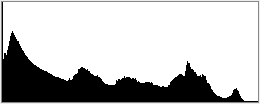

A skilful image frequently, but non e'er, has a histogram spread all over.
HISTOGRAM HISTORY
Histograms are rocket science. Histograms take been used for automatic image evaluation and optimization in self guided missiles for decades. When Tomahawk missiles share America'south freedom with millimeter precision, you lot tin can thank histograms. Raytheon calls this "Digital Scene Matching Area Correlation," or DSMAC. This all used to be classified.
Y'all are smarter than a histogram. Apply them every bit guides, non Gods.
Colour HISTOGRAMS
Colour histograms are required for colour digital photography. Many cameras lack these. I comprehend this later. If your photographic camera only has a single histogram, like the Nikon D70s, D1X or Canon 20D, ignore the histogram! Single histograms are dangerously misleading.
I use a single histogram equally a simplified case. DON'T utilise a histogram to set exposure unless you have a colour (RGB) histogram!
SETTING EXPOSURE
Warning: I evidence a unmarried histogram to simplify. DON'T use a single histogram to fix exposure! Yous demand a color histogram, otherwise y'all may overexpose colored areas and not know it. Read on to Color Histograms after you read this.
Contrary to your camera manual, the histogram doesn't have to be in the middle. Black cats in coal mines may but apply the left half. Snow scenes may only use the right half.
The disquisitional thing for which a histogram is helpful is to determine if any highlights accept been clipped and washed out. Overexposure is decease for a digital paradigm. Histograms brand this easy to bank check. If you have washed-out areas of 100% white (digital value 255) you'll see a alpine vertical line at the far right of the histogram.
If you accident an paradigm to smithereens you'll run across more than than but i line peaked on the right. You may see a train wreck!
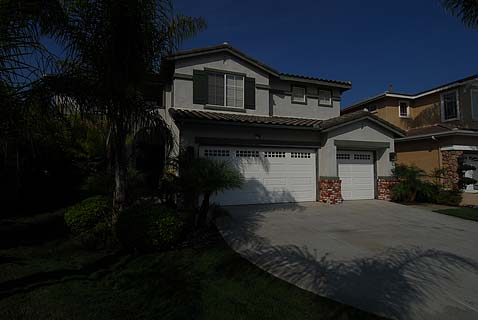 | -ii stops underexposure. Even the whitest whites (the little hump in the heart) are medium gray. Everything else is dark and lumped on the left. This would be OK for a black cat in a coal mine, but non for a normal shot. |
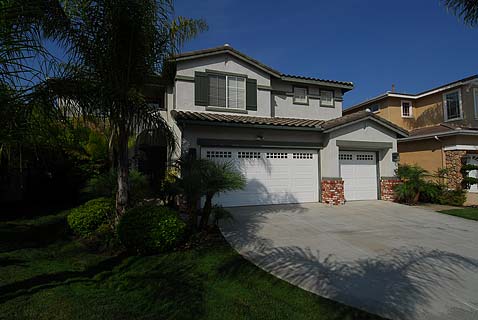 | -ane stop underexposure. Some very small highlights are reaching towards white. That'southward the very slight extension to the right. |
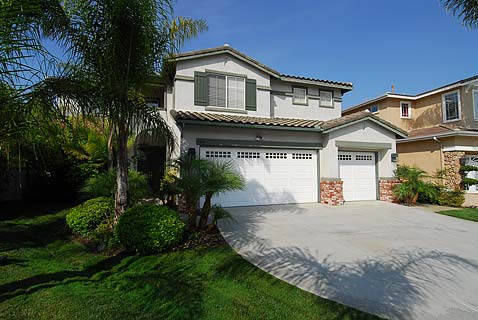 | Normal exposure. The little hump on the right are the pixels corresponding to the white door. They are where you want them: close to white, but not clipped. The hump means the values are spread around a niggling bit, meaning you have detail and not a flat, washed-out door. Yous could requite it a little more exposure and be OK. You'll learn from experience. that this is close plenty, because even ane/iii terminate more would clip. Await carefully and you'll see a few pixels indicated to the right of the hump at the brightest levels. These are specular highlights and are OK to clip in moderation. |
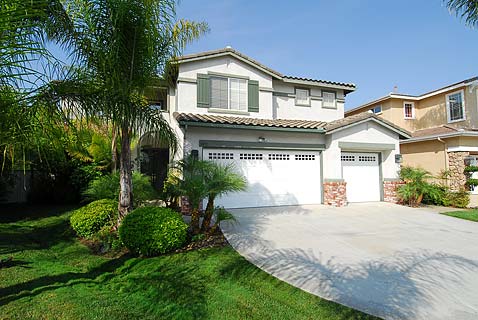 | +i Stop Overexposure Meet the subtle vertical line on the right in addition to the box enclosing the histogram? That'south what used to be the hump that was the white garage door! Overexposure smashed it into the right side of the histogram. Information technology is washed out and clipped at 100% white Instead of having detail. Overexposure is shown on a histogram as this subtle peak on the far right. |
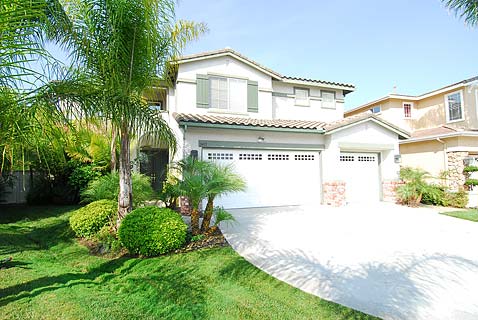 | +2 Stops Overexposure See the train wreck on the far right? This shot is so overexposed that there are a ton of pixels blown out to 100% white. As you lot overexpose more and more, the graph moves further to the right and eventually clips as your image destroys itself. |
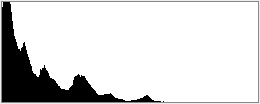
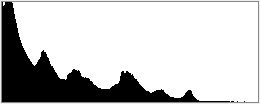
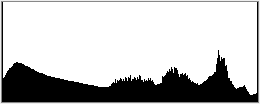

Reduce exposure if you see clipping. Try to get the histogram as shut to the right side as possible without touching it.
If your scene looks also dark when you exercise this there is no correct exposure: the scene'southward dynamic range (lighting ratio) is as well great. In these cases professionals will correct the lighting past adding fill calorie-free to the shadows and/ or using scrims to dim the highlights. Amateurs scramble to endeavour to increase the dynamic range of their cameras using hocus pocus like my increasing dynamic range trick.
A lilliputian bit of clipping is OK on things like the highlights of lord's day dancing on water or the disk of the sun. Clipping broad areas like someone's forehead looks awful and oft shifts colors. This is art and yous'll have to learn what looks good to you. In that location is no police force, then don't worry about being scientifically correct.
Await closely and you'll see a peak on the left at 100% blackness, even when overexposed. This is the dark shadow on the left of the photo. This shows that the camera's contrast needs to be lowered, or better still, add together fill light in the shadows. This is why you lot would see iii huge trucks full of electric generators and lighting equipment if this was a Hollywood moving-picture show shoot. It takes a lot of artificial lighting to make a scene look natural on camera. Cameras respond very differently than our optics.
Unremarkably an image is underexposed if no channel of the histogram goes all the way to the right. Images that are besides dark are like shooting fish in a barrel to right later; simply drag the right slider in Photoshop's Levels command to the left to meet the edge of the histogram.
Overexposed digital images are almost useless. Anything that washes out to white is gone forever. There is no way to drag Photoshop'southward Level slider to the correct of the right side because in that location'southward no data out in that location beyond 255.
NEXT: COLOR HISTOGRAMS (click)
PLUG
If you lot detect this equally helpful as a book you lot might accept had to buy or a workshop you may have had to have, experience complimentary to help me write more with a donation.
Thank you for reading!
Ken
Source: https://www.kenrockwell.com/tech/histograms.htm
Posted by: cotecauseveras1987.blogspot.com
0 Response to "How To Adjust Histogram In Camera"
Post a Comment